

Key Takeaways:
· Use advanced materials, protective treatments, and monitoring technology to prevent structural decay.
· Ongoing maintenance and a sustainability-focused approach are crucial for building longevity.
· Collaboration among engineers, architects, owners, and maintenance teams ensures best practices.
· Learning from past decay cases and investing in research, education, and policy strengthens safety and value.
With the growth of urban environments and innovative architecture, preserving the structural integrity of buildings remains a top priority for engineers, property owners, and city planners alike. Ineffective management of building deterioration can lead to safety risks, disruptions, and costly repairs. Approaching this topic holistically ensures that new and existing constructions remain safe, resilient, and valuable. Whether you are dealing with a residential high-rise or a commercial structure, professional solutions like BIM Remedial Sydney can provide expert guidance on proactive building maintenance and remediation.
Addressing structural decay early on offers significant benefits. It not only extends a building’s lifespan but also minimizes future financial liabilities and ensures occupants’ safety. As cities modernize, combining advanced technology with time-tested maintenance practices can curb long-term damage and help avoid catastrophic failures.
Understanding Structural Decay
Structural decay is defined as the progressive weakening or breakdown of building materials. This can lead to reduced performance, visible damage, or even the eventual collapse of structures if left unchecked. The primary culprits behind decay include prolonged moisture infiltration, temperature fluctuations, exposure to chemicals, and biological agents such as mold or termite activity.
Substandard construction materials, inadequate maintenance schedules, and poor ventilation compound these risks. For example, porous concrete can absorb water, leading to internal corrosion of steel reinforcements, while untreated wooden elements may become breeding grounds for decay-causing fungi. In coastal or humid climates, the threat is particularly pronounced, making preventive measures even more critical.
Innovative Materials for Enhanced Durability
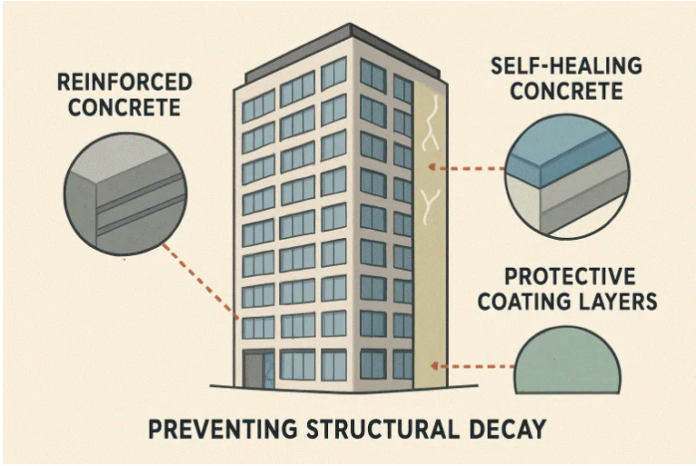
Recent advancements in construction materials offer promising solutions to combat structural decay. One of the most significant breakthroughs is the development of self-healing concrete, which utilizes bacteria to autonomously seal cracks by producing limestone. This innovation reduces the need for frequent repairs, preserves the structural stability of buildings, and limits the penetration of moisture and corrosive agents. Research from BBC Science Focus highlights how self-healing materials are being implemented in infrastructure worldwide, signaling a new era in building durability.
Innovative materials also include advanced composites and corrosion-resistant alloys, which outperform traditional steel and concrete in harsh conditions. Their use in bridges, tunnels, and high-rise buildings improves resilience and reduces maintenance costs over the building’s lifecycle.
Another noteworthy development is the use of high-performance fiber-reinforced polymers (FRPs) for reinforcing structural components. These materials not only provide enhanced strength and flexibility but are also resistant to environmental degradation, which helps maintain their properties over time. FRPs are increasingly used in retrofitting aging infrastructure, providing a cost-effective and sustainable solution to prolong building lifespans. Additionally, the integration of nanotechnology into construction materials has enabled coatings and admixtures that further resist water penetration and biological attack, exponentially increasing the protective properties of traditional substrates.
Early Detection and Monitoring Systems
Real-time monitoring systems enable precise building health tracking by leveraging sensors and autoencoders to detect structural anomalies early. These smart systems alert managers to issues such as subsidence or movement, enabling targeted, cost-effective repairs rather than large-scale interventions. Industry experts say monitoring enhances preventative maintenance, safety, and reliability, especially in urban areas. Remote data analysis helps prioritize repairs and track trends over time, improving decision-making. AI and machine learning further enhance the detection of early warning signs, revolutionizing maintenance practices.
Protective Coatings and Treatments
Applying high-quality coatings is essential for preserving building components, especially wood, steel, and concrete, as they repel moisture, protect against UV damage, and deter biological threats. Exterior wood treatments protect against fungus and water, while anti-corrosive paints prolong the life of the metallic parts. Routine inspections and timely reapplications help catch early signs of failure, such as blistering or peeling, preventing further damage. Advances in coating tech now offer longer-lasting, self-cleaning surfaces that repel pollutants, reducing decay and cleaning costs. Some coatings incorporate nano-particles with antibacterial and UV-resistant properties, enhancing surface protection. Choosing appropriate coatings based on building risk profile can significantly extend a facility’s lifespan.
Regular Maintenance and Inspections
Proactive maintenance and inspections are key to preventing structural decay. Regular checks identify wear, leaks, or cracks before they worsen. Maintenance includes clearing drainage, fixing leaks, replacing sealants, and maintaining building envelopes. Owners should work with professionals to create tailored plans based on their building’s age, materials, and risks. Seasonal checks after storms or temperature changes add an extra layer of security. Periodic third-party reviews provide objectivity and can catch issues missed internally. Educating owners about early signs of decay and encouraging them to report minor problems helps with early repairs, lowering costs and safety risks.
Implementing Sustainable Design Practices
Sustainable design is a vital component of long-term structural health, incorporating features like green roofs, permeable pavements, and vertical gardens that regulate temperatures, manage water, and reduce environmental stress. These innovations enhance urban biodiversity, air quality, and ease drainage load. Good sustainable design minimizes decay risks and aligns with maintenance. It also emphasizes adaptive reuse, rehabilitating older buildings with modern techniques instead of demolishing, preserving cultural heritage, and reducing waste. Using locally sourced, low-impact materials supports ecological goals and enhances the resilience of new and retrofitted structures.
Conclusion
Preventing structural decay in modern buildings requires advanced materials, monitoring technology, protective treatments, and ongoing maintenance. A comprehensive approach that prioritizes sustainability and longevity is crucial for safeguarding buildings and preserving their value. Collaboration among engineers, architects, owners, and maintenance personnel is essential to ensure best practices. Documenting and learning from past decay cases will drive industry evolution, while continued investment in research, education, and policy will enhance safety, value, and sustainability in the built environment.a
