

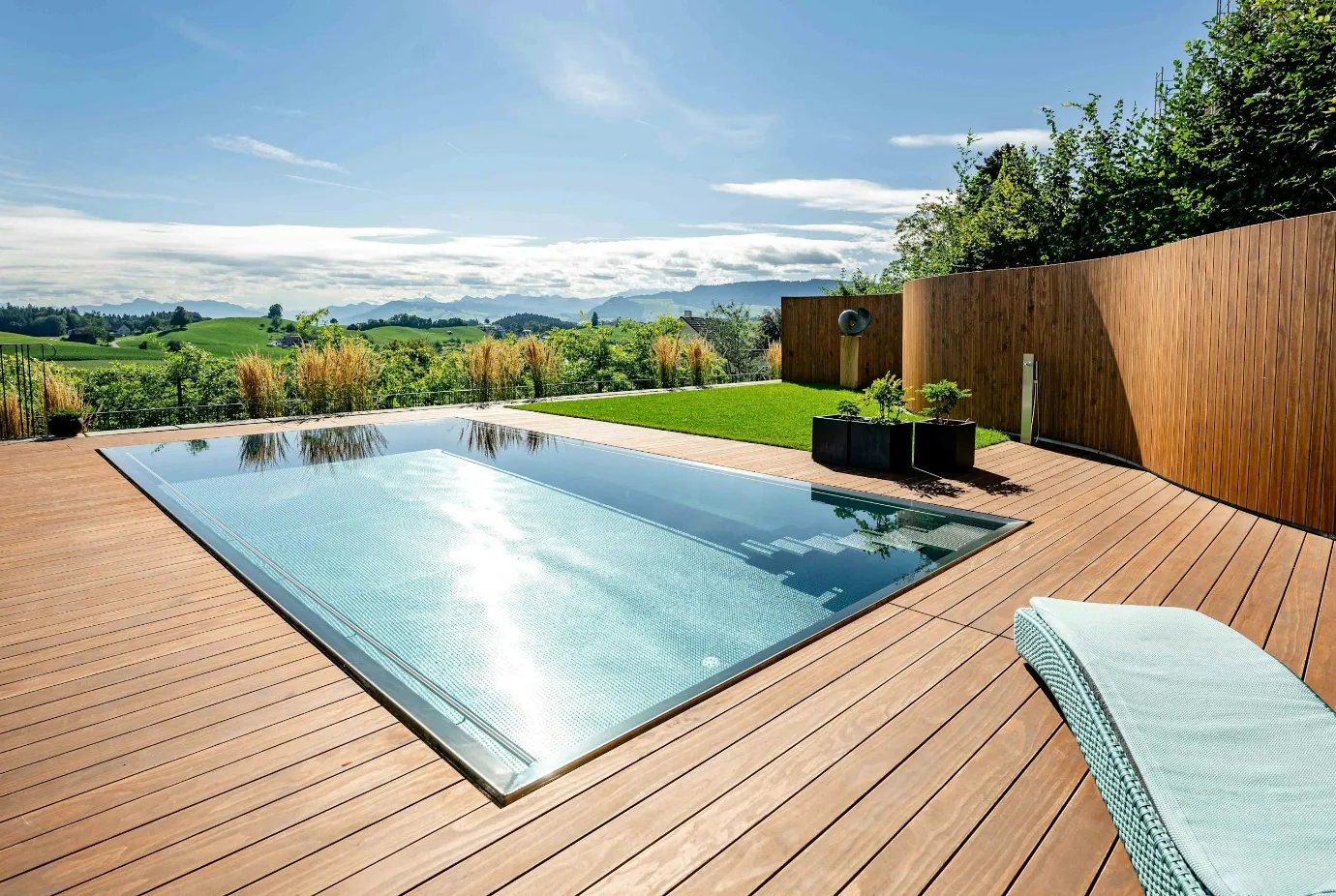
A pool deck lives a harder life than most surfaces. It bakes in direct sun, gets drenched daily, and carries wet bare feet that demand reliable grip. Searching for the best pool deck coating usually starts with color, yet the real decision rests on heat, traction, and chemistry. This article explains each factor so your choice stays comfortable, safe, and attractive for years.
The Heat Problem
Dark, dense surfaces absorb sunlight and can become uncomfortably hot on summer afternoons. Bare feet notice immediately, and children are especially sensitive. Surface temperature depends on color, material, and exposure.
Lighter shades reflect more solar energy and stay noticeably cooler. Some specialized topcoats also include heat-reflective pigments. Ask for a sample, leave it in the sun for an afternoon, and test it with your hand before deciding.
Grip When Everything Is Wet
Slips around pools cause serious injuries, so traction is not optional. Coatings achieve grip through embedded aggregates such as fine sand or polymer grit. The right size gives confidence underfoot without feeling abrasive.
Too much texture hurts bare feet and traps dirt, while too little turns slick. Test samples wet, with bare feet, and consider steps, ramps, and edges where footing is most critical. Compare textures before agreeing to a final specification.
Chemical and Water Exposure
Chlorine, salt, sunscreen, and cleaning products all contact the deck. Splash zones near the water face the most aggressive exposure. A suitable coating resists staining, chalking, and softening under those conditions.
Saltwater pools deserve extra care because salt can crystallize and attack porous materials. Sealed, non-absorbent surfaces handle it better. Rinse the deck periodically with fresh water to wash away residues before they build up.
Cracks, Joints, and Water Movement
Concrete decks move with temperature and soil changes. Cracks must be repaired with flexible materials before any coating goes on; otherwise, they will telegraph through the new surface. Expansion joints should remain functional.
Drainage is equally important. Water should flow away from the pool and the house, never pooling in low spots. Correct slopes or add drains where needed, because standing water breeds algae and shortens coating life.
Choosing an Installer
Experience with outdoor, wet-area work is essential. When comparing each epoxy coating company, ask about pool projects, the preparation methods they use, and how they handle UV exposure. Request photos of decks that are several years old.
Check the warranty terms and what conditions apply. Good contractors explain maintenance expectations plainly. Be cautious with bids that skip grinding or crack repair, because those steps determine whether the coating bonds properly.
Installation Timing and Weather
Outdoor coatings depend on temperature and humidity. Applying during rain, dew, or extreme heat can cause cloudiness, bubbles, or poor adhesion. Reputable crews watch forecasts and adjust schedules accordingly.
Allow adequate cure time before returning to the pool. Pushing the schedule to meet a party date risks damage to the fresh surface. Plan the project during a calm, dry stretch with plenty of buffer.
Cleaning and Seasonal Care
Sweep leaves and debris regularly, and rinse the deck with a hose. Use mild detergent for stains, and avoid harsh acids or stiff wire brushes. Gentle methods preserve the texture and color.
At the start and end of each swim season, inspect for wear, cracks, and thinning grip. Small repairs and light recoating keep the surface performing well. Consistent care avoids bigger, costlier work later.
Conclusion
A great pool deck coating balances heat reflection, grip, chemical resistance, drainage, and skilled installation. Test samples wet and in the sun, repair cracks properly, and maintain the surface gently. The result is a deck that feels safe and looks inviting season after season.
To learn more about suitable finishes and plan your project, visit huskycoatings.com and talk with the team.
