

Post Preview
Key Takeaways
- Coastal home buying involves more than views, square footage, and asking price.
- Flood exposure, shoreline rules, insurance, utilities, and access can affect both daily life and long-term costs.
- A peaceful setting should still support work, school, health care, errands, and emergency access.
- Inspections should look closely at moisture, drainage, roofs, foundations, septic systems, wells, and exterior structures.
- The best property is one that fits your lifestyle, risk tolerance, and complete ownership budget.
Table Of Contents
- Why Coastal Living Needs a Closer Look
- Match the Community to Daily Life
- Build a Full Ownership Budget
- Review the Property Beyond the Listing Photos
- Check Flood Exposure and Insurance
- Learn the Shoreline Rules Before Planning Changes
- Confirm Utilities, Internet, Roads, and Emergency Access
- Use a Simple Offer-Readiness Process
- Questions Buyers Commonly Ask
- Conclusion
Washington’s coastal and island communities can offer exceptional scenery, outdoor recreation, and a slower daily rhythm. They also call for a more careful buying process, because wind, rain, salt air, road access, utilities, and shoreline regulations can shape the experience of owning a home. Buyers reviewing Homes for Sale in Camano Island can use Julie Love’s local property-search resource to compare active listings, home styles, and locations across Camano Island. Julie Love focuses on coastal real estate on Camano Island and nearby Stanwood, with local market experience that helps buyers ask the right questions as they compare waterfront, view, acreage, and neighborhood properties.
Why Coastal Living Needs a Closer Look
A sunny showing can make nearly any coastal property feel effortless. However, a home may perform very differently during a winter storm, a power outage, a high-traffic summer weekend, or heavy rainfall. The goal is not to avoid coastal living. It is important to understand how the setting affects comfort, maintenance, and plans before making an offer. Try to visit at more than one time of day. Drive the approach road, listen for traffic or boat noise, observe drainage, and note how exposed the home feels. A beautiful view is valuable, but the complete ownership experience matters more.
Match the Community to Daily Life
A scenic location should work for your routine, not just weekend relaxation. Confirm actual drive times to work, school, grocery stores, pharmacies, health care, and recreation. Consider whether delivery drivers, guests, contractors, and home service providers can easily reach the property.
Questions to Ask
- How long is the commute during normal peak traffic?
- Where are the nearest grocery stores, pharmacies, urgent care facilities, and hospitals?
- Does the area feel suitable for full-time living, seasonal use, or both?
- Can internet service support remote work, video calls, streaming, and security systems?
- Will visitors and service providers have reliable access?
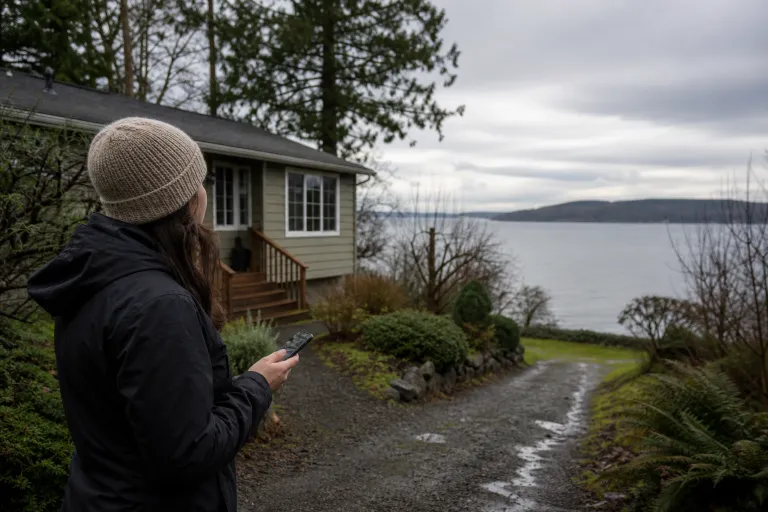
For example, a remote worker may love a quiet bluff-top setting but later find that inconsistent broadband and frequent long drives create daily friction. Test mobile reception and internet speed at the property rather than relying on an availability estimate.
Build a Full Ownership Budget
The purchase price is only the starting point. A realistic ownership budget should include property taxes, homeowners’ insurance, possible flood coverage, utilities, private-road dues, septic or well service, tree work, storm cleanup, and transportation costs. Request recent utility bills where possible, areas we serve generator repair and maintenance and obtain insurance estimates before finalizing major decisions.
- Roof, siding, window, deck, and drainage maintenance
- Heating fuel, electric costs, and backup-power needs
- Well testing, pump repairs, septic inspections, and pumping
- Road maintenance, snow or debris removal, and shared-access agreements
- Regular travel for errands, work, school, and appointments
Review the Property Beyond the Listing Photos
Coastal and island homes deserve a detailed condition review. Look for moss, worn paint, damaged seals, soft deck boards, standing water, musty crawl spaces, or slopes that direct runoff toward the foundation. Older homes are not automatically a poor choice, but their maintenance history should be clear.
Property Features to Review
- Roof age, flashing, gutters, and visible moisture damage
- Exterior siding, windows, doors, decks, stairs, and railings
- Foundation walls, crawl spaces, drainage routes, and retaining walls
- Heating equipment, fireplaces, generators, and electrical capacity
- Storage for outdoor gear, tools, boats, kayaks, and seasonal equipment
Choose an inspector familiar with the local climate and the property type. The point is to understand the present condition, likely repairs, and maintenance priorities, not to expect a perfect home.
Check Flood Exposure and Insurance
Review mapped flood hazards, seller disclosures, prior water intrusion, driveway drainage, and insurance options early in the process. Flood mapping and risk information should be treated as one part of due diligence, not as a substitute for a site-specific inspection. Buyers can begin by reviewing FEMA flood map information, then discuss coverage requirements and exclusions with an insurance professional.
- Is the home in a mapped flood hazard area?
- Has the property experienced flooding, erosion, or drainage problems?
- Does a lender require flood insurance?
- Are docks, retaining walls, roads, and detached structures covered?
Learn the Shoreline Rules Before Planning Changes
Waterfront ownership does not always mean unrestricted freedom to build or alter the land. Decks, docks, stairs, vegetation removal, grading, bulkheads, seawalls, septic work, and additions may require review. Washington’s Shoreline Management Act provides a state framework implemented through local shoreline programs. Never assume an existing structure can be rebuilt, enlarged, or relocated under today’s rules. Confirm permits, setbacks, recorded restrictions, and project feasibility with the applicable county or local planning department before treating a future improvement as part of the home’s value.
Confirm Utilities, Internet, Roads, and Emergency Access
- Confirm whether water comes from a public system, private well, or shared source.
- Review septic records, inspection reports, and maintenance history.
- Identify the heating fuel and ask about service availability.
- Test broadband and mobile service at the house.
- Determine who owns and maintains the road or private lane.
- Check driveway slope, width, drainage, parking, and emergency-vehicle access.
- Ask about outage history and whether the home has generator connections.
Use a Simple Offer-Readiness Process
- Set lifestyle requirements for commute, privacy, water access, space, and services.
- Create a complete budget that includes recurring and occasional ownership costs.
- Visit the location at different times and verify real drive times.
- Review condition, permits, drainage, utilities, insurance, and shoreline concerns.
- Use qualified professionals, including an inspector, lender, insurance agent, and planning office.
- Write an offer only after the major practical questions have answers.
Questions Buyers Commonly Ask
Is a coastal home always more expensive to own?
No. Costs vary by home age, exposure, insurance, utilities, maintenance history, and location. The key is estimating the full cost before comparing homes.
Should buyers avoid older homes near the water?
No. Older homes can provide character and desirable locations. They need a careful review of moisture control, systems, foundations, permits, and repair records.
What is the biggest mistake coastal buyers make?
Focusing on the view while overlooking access, drainage, insurance, utilities, and future maintenance. The strongest purchase balances the setting with practical daily needs.
Final Thoughts
Coastal community living can offer peace, beautiful scenery, and a strong sense of place, making it an appealing choice for many buyers. However, enjoying those benefits over the long term requires careful planning and informed decision-making. Buyers who verify community rules, inspect the property thoroughly, evaluate insurance and maintenance costs, understand potential coastal risks, and test how the location fits their daily routine will be better positioned to make a confident purchase. Taking time to compare neighborhoods and long-term ownership responsibilities can help ensure the home remains enjoyable, practical, and financially manageable for years to come.
