
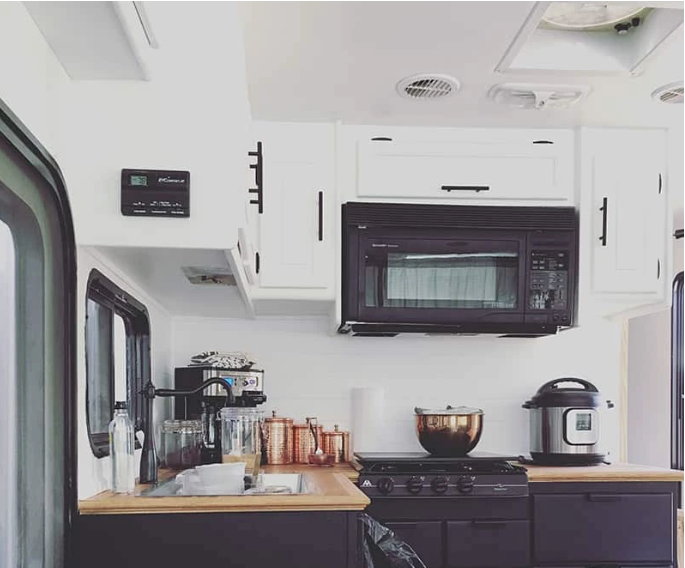

RV cabinets are not just storage or decoration. They are part of the RV’s structure, weight balance, and daily usability. Unlike house cabinets, RV cabinets must survive vibration, movement, temperature changes, and shifting loads while staying lightweight and securely mounted.
Poorly built or damaged cabinets are a constant source of noise, loose hardware, broken hinges, and in some cases even safety issues while driving.
How RV cabinets are different from residential cabinets
RV cabinets are designed with weight as a priority. Thin plywood, lightweight composites, and minimal framing are commonly used. This keeps the RV within weight limits but also means cabinets are more sensitive to moisture, fastener failure, and improper repairs.
Residential cabinet methods often do not translate well to RVs. Heavy materials, wrong fasteners, or rigid mounting can cause cracking or pull-out over time.
Common RV cabinet problems
One of the most common issues is loose cabinets. Screws back out from vibration, mounting points weaken, and cabinets begin to shift. Rattling doors, misaligned latches, and sagging shelves usually follow.
Water damage is another major problem. Even a small leak can swell cabinet panels, delaminate surfaces, and weaken joints. Once moisture gets into cabinet materials, cosmetic fixes rarely last.
Older RVs often suffer from outdated cabinet layouts that waste space or make access difficult. In these cases, owners look beyond repair and consider modification or replacement.
Repair vs replacement of RV cabinets
Not every cabinet problem requires replacement. Many issues can be repaired by reinforcing mounting points, replacing hardware, rebuilding damaged sections, or re-securing cabinets to structural members.
Replacement usually makes sense when cabinets are severely water damaged, poorly designed, or when a full interior renovation is planned. Custom-built RV cabinets can dramatically improve storage and usability, but they must be designed with weight and balance in mind.
Cabinet upgrades that actually improve daily life
Practical upgrades often matter more than visual ones. Soft-close hinges reduce noise and wear. Better latches prevent doors from opening while driving. Redesigned shelves and drawers can double usable storage without adding weight.
In motorhomes and trailers used full time, cabinet layout has a direct impact on comfort and frustration levels.
Installation and mounting considerations
RV cabinets must be mounted to structural points, not just thin wall panels. Proper fastening, backing plates, and allowance for movement are critical.
Incorrect installation can lead to cabinets pulling away from walls, cracked panels, or stress on the RV structure itself. This is especially important in overhead cabinets, where failure becomes a safety issue.
Custom RV cabinets and renovations
Custom cabinets are often part of larger renovations, especially in older RVs or Airstream trailers. Done correctly, they modernize the interior and improve functionality without compromising weight or safety.
Done incorrectly, they overload the RV, affect handling, and create long-term structural problems.
Professional RV cabinet repair and fabrication
When cabinet issues go beyond simple fixes, professional help makes sense. Specialists like Custom-way work with RV cabinets as part of complete interior repair and renovation projects. Their approach considers mounting, weight, moisture history, and how cabinets interact with walls, floors, and ceilings.
This prevents the common problem of cabinets looking good but failing after a short time on the road.
RV cabinets are functional components, not just furniture. Repairing or upgrading them correctly improves safety, reduces noise, and makes daily RV living easier. Whether repairing loose mounts or planning a full interior upgrade, respecting RV-specific construction principles is what makes the result last.
