
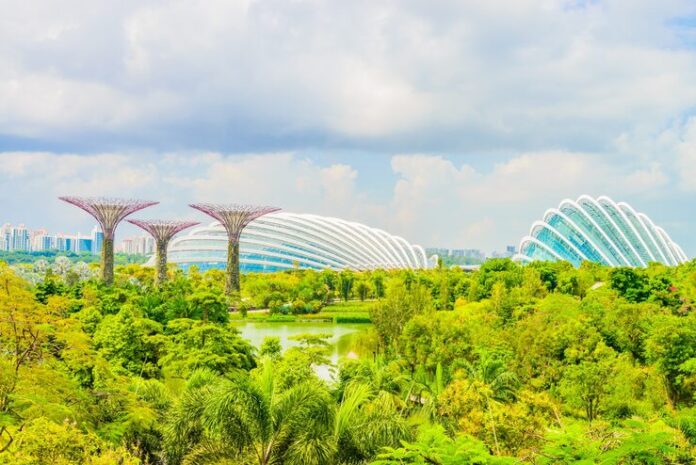

By 2026, the Singapore Green Plan 2030 has reached critical milestones, including the development of over 130 hectares of new parks and the enhancement of 170 hectares of existing green spaces. This “City in Nature” pillar ensures every household is moving toward being within a 10-minute walk of a park, a target that directly influences the design of projects like Dunearn House. Furthermore, the 2026 targets include a 20% daily reduction in landfill waste per capita, driving developers to integrate sophisticated waste management and circular economy principles into residential architecture.
The push for “Greener Infrastructure and Buildings” dictates that 80% of new developments must be Super Low Energy (SLE) buildings from 2030, with 2026 serving as the vital transition period where best-in-class energy efficiency is no longer optional but a market standard. In this landscape, Dunearn House and Hudson Place Residences have emerged as dual leaders, each interpreting these mandates through distinct architectural lenses.
Sustainable Design: The Human-Centric Philosophy of Dunearn House
Dunearn House is a flagship collaboration between Frasers Property and Sekisui House, two titans of the industry. Sekisui House brings its globally acclaimed “human-centric” design philosophy, rooted in the corporate mission of “Love of Humanity” and the vision to make home the “happiest place in the world”. This approach prioritizes long-term happiness, enduring value, and a deep emotional connection between residents and their environment.
Energy-Neutrality and Thermal Innovation
At the core of Dunearn House’s sustainability is its commitment to energy-neutral home designs. Leveraging Sekisui House’s “Green First” policy—which has seen the cumulative number of Zero Emission Houses (ZEH) reach nearly 90,000 units—the development features high-performance insulation and energy-generating systems like solar panels.
The architectural strategy focuses on:
- High-Efficiency Thermal Insulation: Utilizing advanced materials to stabilize interior temperatures, reducing the need for intensive air conditioning in Singapore’s tropical climate.
- Natural Cross-Ventilation: The project’s low-density setting in District 11 is strategically used to maximize airflow, ensuring that homes remain cool and comfortable through passive design.
- Energy Management: Integrated systems that reduce net monthly living costs and mitigate risks from energy price increases.
Biophilic Urbanism and Native Landscaping
Dunearn House embodies “biophilic urbanism,” an emerging paradigm that integrates natural systems into high-density urban settings. Inspired by the “Gohon no Ki” (Five Trees) project, the landscaping utilizes native flora to support local biodiversity, attracting birds and butterflies to the doorstep of every resident. This native landscaping does more than beautify; it preserves the local ecosystem of the Bukit Timah enclave and contributes to the “City in Nature” vision of the Green Plan 2030.
Smart Synergy: The Digital-Native Ecosystem of Hudson Place Residences
In the innovation corridor of District 5, Hudson Place Residences serves as a landmark for functional smart-home integration. Spearheaded by Qingjian Realty, a developer with a legacy of smart living innovation—from the first smart community in 2015 to the first smart home in 2016—the project is tailored for the 2026 digital native.
Integrated Resource and Energy Management
Every unit at Hudson Place is an intelligent assistant. Residents utilize mobile applications to monitor energy and water consumption in real-time, aligning with the Green Plan’s target to reduce household water consumption to 130 liters per capita.
Smart features include:
- Smart Aircon and Eco Water Heaters: Heat recovery systems that repurpose waste heat from air conditioning condensing units to heat water tanks, saving up to 35% on electricity bills.
- IoT-Enabled Appliances: Voice-controlled lighting, curtains, and entertainment systems that optimize energy use based on occupancy and time of day.
- Air Quality Monitoring: PM2.5 dust collection filters integrated into air conditioning systems to ensure a healthy indoor environment.
Supporting the “Work-from-Anywhere” Lifestyle
Hudson Place Residences is more than a home; it is a hub for the modern workforce. Under the Draft Master Plan 2025, the Media Circle precinct is being transformed into a “live-work-play” ecosystem. The development supports this with:
- Co-Working Lounges: High-tech spaces designed for professional productivity, reducing the need for daily commutes and supporting the Green Plan’s objective of greener commutes.
- Integrated Commercial Elements: Ground-floor retail and F&B options ensure daily needs are met within the 15-minute city radius.
- Smart Community Services: App-based facility booking, 24/7 smart parcel stations for e-commerce, and even childcare services available at a touch.
Architectural Evolution and Urban Planning in 2026
The year 2026 represents a shift from previous urban planning frameworks to the Draft Master Plan 2025, which focuses on healthier lifestyles and climate resilience.
- Dunearn House leverages the Bukit Timah Turf City rejuvenation, which will see up to 20,000 new homes integrated with lush greenery and well-connected transport routes. It is a project where architecture acts as a bridge to the historic Rail Corridor and surrounding nature spaces.
- Hudson Place Residences sits within the expanded One-North precinct, where 5,000 private homes in Mediapolis will support a growing hub for biomedical sciences, media, and technology. Here, “vertical innovation” utilizes high-performance building envelopes and IoT-enabled sensors to manage district-wide data, turning the residence into a “living lab” for urban innovation.
The 2026 Market Verdict
As Singapore reinforces its status as a premier global investment destination, these two projects offer a window into the future of urban living.
- Dunearn House provides a sanctuary of “luxurious eco-tranquility,” appealing to families who prioritize wellness, elite education, and the permanence of CCR prestige.
- Hudson Place Residences offers a dynamic “smart synergy,” catering to tech professionals and investors seeking high growth in a vibrant innovation corridor.
Both developments not only meet the rigorous standards of the Singapore Green Plan 2030 but exceed them, showcasing how sustainable architecture and smart technology can coexist to create a more resilient, inclusive, and efficient city for 2026 and beyond.
