

Key Takeaways
· Bathroom safety starts with observing daily movement, not simply buying safety products.
· Clear floors, reliable lighting, and easy-to-reach essentials can address common hazards.
· Stable seating, properly installed grab bars, slip-resistant surfaces, and easier shower entry can add practical support.
· A well-planned layout should work today while leaving room for future changes.
· Professional guidance can be valuable when balance, strength, vision, or memory affect bathroom use.
A safer bathroom begins with the routines that happen there every day: getting out of bed at night, stepping into the shower, reaching for a towel, or standing up from the toilet. Thoughtful changes can make those routines easier without making the room feel medical or impersonal. For homeowners considering a larger update, Bath Fitter easy access showers illustrate how lower-entry bathing options can be paired with features such as seats, grab bars, and handheld fixtures.
Planning early gives you more choices. Instead of rushing into changes after a fall, surgery, or a new mobility concern, you can prioritize improvements that suit the room, your budget, and how the household actually uses the space. The goal is not to predict every future need. It is to create a bathroom that feels comfortable, supports independence, and can adapt when needed.
Why Bathroom Safety Deserves Early Attention
Bathrooms combine water, hard surfaces, tight turning areas, and frequent changes between sitting, standing, and stepping. A loose mat, a dark pathway, or an awkward reach can turn an ordinary task into an uncomfortable one. Addressing those details ahead of time can reduce daily frustration and make it easier for a person to remain confident in familiar surroundings.
Safety-focused design does not have to look institutional. Coordinated finishes, attractive hardware, warm lighting, and uncluttered storage can create a calm, modern room. The best updates blend support into the overall design so the bathroom remains a welcoming part of the home.
Start With A Simple Bathroom Safety Check
Before choosing fixtures or beginning construction, walk through the bathroom at the times it is most often used. Pay attention to where your body naturally reaches, turns, and pauses.
1. Walk through the room during daylight and again at night.
2. Look for loose rugs, cords, clutter, poor lighting, and wet areas that stay slippery.
3. Notice whether stepping over a tub wall, bending to reach supplies, or turning in a narrow space feels difficult.
4. Check that soap, towels, medications, and toiletries are within easy reach.
5. Consider whether a family member or caregiver could assist safely if temporary help became necessary.
Improve Flooring, Lighting, And Visibility
Choose flooring and bath surfaces with traction appropriate for wet conditions, and keep the route from the door to the sink, toilet, and shower clear. Baskets, decorative stools, and small floor accessories can reduce usable walking space. If a mat is necessary outside the shower, it should lie flat and stay securely in place.
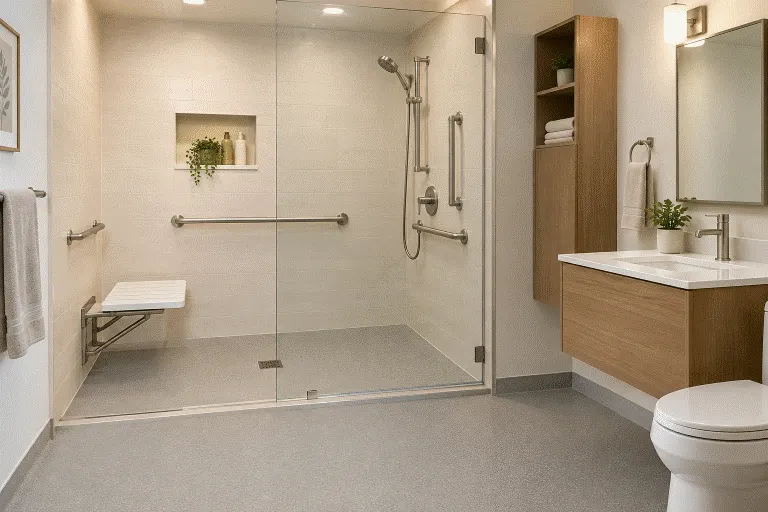
Lighting matters just as much as flooring. Use even illumination at the entry, vanity, toilet, and bathing area, then add a night light or a motion-activated option for overnight trips. Reduce glare where possible, and use enough visual contrast to help define edges, controls, and changes in level.
Make Bathing Easier And More Stable
Stepping over a high tub wall can require balance on one leg while navigating a wet surface. A lower-threshold shower or other easier-entry bathing arrangement may reduce that challenge. The right choice depends on the room, the user’s mobility, and whether the bathroom needs to serve more than one person.
A stable shower seat can provide a place to rest while bathing, especially for someone who tires easily or has limited standing tolerance. A handheld shower fixture, easy-to-operate controls, and shelves positioned within reach can further reduce twisting, stretching, and unnecessary movement. Any seat or support feature should be selected for the user and installed to meet their requirements.
Choose Support Features With Care
Support features work best when their placement matches the person’s height, reach, strength, and typical movement pattern. A helpful combination may include:
· Properly secured grab bars near the bathing area and toilet.
· A shower seat at a comfortable transfer height.
· Slip-resistant surfaces inside and immediately outside the bathing area.
· Single-lever or easy-grip faucet controls.
· Storage that avoids deep bending, overhead reaching, or carrying items across the room.
A towel bar is not designed to serve as a grab bar. The bathroom safety guidance for adults from MedlinePlus also emphasizes keeping pathways clear and securing grab bars to the wall rather than relying on ordinary bathroom hardware for body-weight support.
Plan The Layout Around Real Daily Movement
Clear floor space is important for people using canes, walkers, wheelchairs, or caregiver assistance. Door swings, vanity depth, toilet placement, and storage choices all affect how easily someone can move through the room. A first-floor bathroom may also be especially useful for a person who finds stairs difficult.
Measure before ordering fixtures, and consider marking proposed clearances on the floor with painter’s tape. This simple exercise can reveal whether a new door, seat, or shower enclosure will interfere with turning space or access to a cabinet. If walls are opened during a remodel, ask whether reinforcement can be added for present or future grab bars.
Small Updates Versus A Larger Remodel
Small Updates
· Remove loose rugs and unneeded floor clutter.
· Add brighter, more even lighting and night guidance.
· Place everyday products between waist and shoulder height when practical.
· Install professionally secured support hardware.
· Use stable bathing seating when it fits the person’s needs.
Larger Changes
· Replace a high-entry bathing area with an easier-entry option.
· Reconfigure fixtures to improve turning and caregiver access.
· Update plumbing, drainage, electrical work, and waterproofing as required.
· Build in accessible storage and wall reinforcement during construction.
When To Ask For Professional Help
An occupational therapist or qualified home safety professional can help identify changes that match a person’s abilities and routines. A licensed contractor should handle structural, plumbing, electrical, and waterproofing work. Ask about measurements, product limits, installation methods, and maintenance before committing to a project.
Common Questions About Safer Bathrooms
What Is The First Bathroom Change To Make?
Start with the most immediate concern, whether that is inadequate lighting, clutter, an unstable support point, or a slippery path.
Can A Small Bathroom Still Be Accessible?
Yes. Careful fixture selection, wall-mounted storage, a clear route through the room, and attention to door placement can improve usability without expanding the footprint.
Should Safety Features Be Added Before They Are Needed?
Planning ahead can reduce disruption later and let homeowners make design decisions on their own schedule.
Research And Planning Resources
Personal needs should guide every decision, but reliable home-safety information can help organize the process. The home modification ideas for fall prevention from the National Council on Aging can help households review lighting, pathways, bathroom surfaces, and other practical details before making changes.
Conclusion
A safer bathroom does not need to be complicated or unattractive. Start with how the room is used each day, address the most pressing hazards, and plan larger changes around real movement and comfort. From improved lighting to a redesigned bathing area, thoughtful choices can support safer, more manageable routines for years ahead.
