
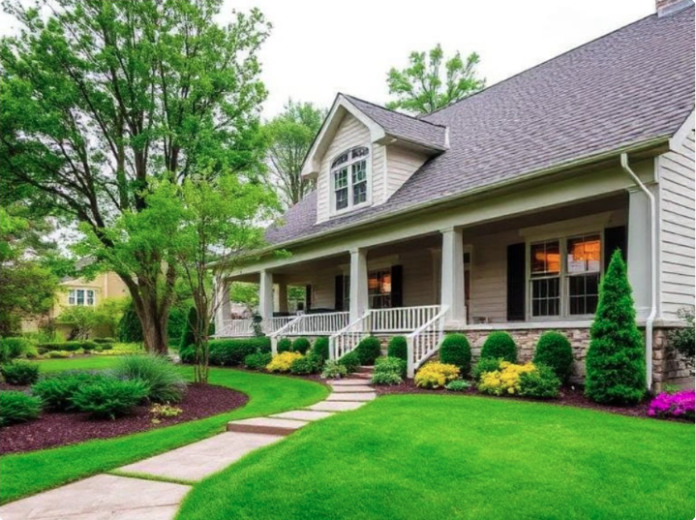

Severe weather conditions can no longer be considered an uncommon occurrence in our society today. From torrential rains and floods to strong winds and wildfires, property owners are presented with the challenge of safeguarding our properties against extreme weather conditions. Although we can never change the weather, we can surely change the way our properties react to extreme weather conditions. Smart landscaping is our first line of defense against extreme weather conditions.
Strategic Grading and Drainage
Water flowing towards our foundations is a surefire way to bring about disaster in our properties. A bad drainage system has already brought about flooded basements and foundations in many properties. In order to avoid all this, strategic grading must take place. Your property must be graded at least 5% away from foundations. This way, water will flow away from your property. Water then must be directed to designated drainage areas.
French drains, dry creek beds, and swales must be strategically placed in order for us to ensure that excess water flows away from your valuables. Rain gardens strategically placed in low-lying areas not only direct excess waters away from our homes but also add an artistic touch to our properties. They not only prevent flooding but also prevent soil erosion, which could lead to the erosion of our properties in the near future.
Choosing the Right Wind-Resistant Trees
Trees will offer shade, privacy, and artistic features for our properties. However, trees are a liability for our properties during extreme weather conditions, despite the fact that trees add a wonderful feature. Trees with flexible trunks, strong roots, and dense wood are wind-resistant. Oak, palm, and cypress trees are great examples of this.
Just like the tree species, the location of trees in our properties is equally important. For example, big trees should be located at least 20 feet away from your home and power lines. This will ensure that damage from a fallen tree during a storm is avoided.
Fire-Resistant Landscaping
If you own a home in a region prone to wildfires, then a defensible space will mean the difference between saving your home from a wildfire and losing your home in a wildfire. First off, a non-combustible space should be developed around your home. This could be achieved by installing gravel, pavers, or concrete within five feet from your home. This will ensure that a wildfire will not jump from the ground to your home.
Next, plants in your home landscape should be selected based on their moisture content. Succulent plants are highly resistant to wildfires compared to juniper and eucalyptus plants. Moreover, stone mulch could replace wood chips in a region prone to wildfires. Well-spaced plants will ensure that a wildfire will not jump from one plant to another. This will ensure that firefighters can save your home in an emergency.
Erosion Control
Among the challenges that people face because of erosion is weakening of the foundation of a house. Another challenge is the destruction of a beautiful landscape. There are various tools that can be used in erosion control in Oklahoma City. These tools include ground covers, terracing, and retaining walls. Deep-rooted plants can also be used. These plants require less maintenance compared to other plants.
If you have a very steep grade in your yard, you can make several tiered garden beds. The tiered garden beds can help break up the flow of the water. The broken flow of the water will, in turn, reduce the power of the water. Retention walls can also be used, and these give support to your yard.
Protecting Your Investment for the Long Term
It costs money to maintain a smart-landscaped property, but the benefit is definitely worth the cost. A smart-landscaped property can reduce damage from the elements, reduce insurance claims, reduce repairs, and stabilize property values.
The first thing you want to think about is what is causing you damage to your property. Is there water that tends to accumulate around the base of your house after a hard rain? Are there mature trees that lean over your house? Are there any wildfires in the area that you live in? Once you think about what is causing damage to your property, you can then think about what you can do to improve the landscaping of your property!
